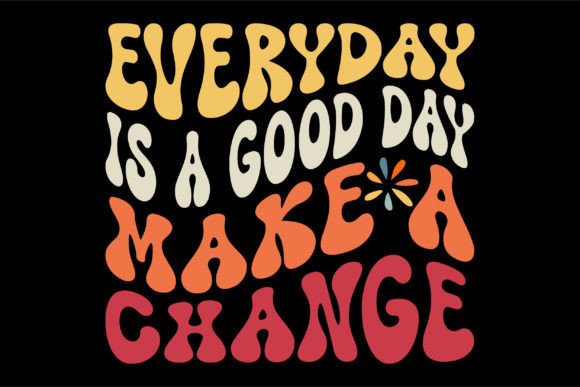
Everyday is a Good Day Make a Change
When I pull up a new machine embroidery design to evaluate for my craft business, I am rarely looking for just another pretty picture. I am looking for viability. I need to know if a design will hold up on the hoop, if it translates well into a sellable handmade product, and if it carries enough visual weight to justify the customer’s purchase. Recently, I took a closer look at the Everyday is a Good Day Make a Change file set. Marketed under the umbrella of T-Shirt Designs and categorized as Graphics, this collection leans heavily into a retro, wavy, groovy aesthetic. At first glance, it looks like a quick digital asset. But after running some mental simulations and reviewing the structural potential, I found that this design has genuine merit for specific applications in small shop merchandise and personalized gifts.
The First Impression: Mood and Visual Personality
The immediate vibe of Everyday is a Good Day Make a Change is optimistic but grounded in nostalgia. The typography appears to utilize those classic 70s-style undulating waves, which creates a sense of movement even when the thread is static. For an embroidery designer, this presents an interesting challenge and opportunity. Unlike rigid geometric shapes, wavy text requires careful attention to how the stitch density interacts with the curves. If executed poorly, the "groovy" feel can turn into a muddy blob. However, if the satin stitch edges are crisp and the fill stitches follow the contour smoothly, the result is a dynamic piece that catches the eye.
This design feels less like a corporate logo and more like a statement piece for custom apparel. It evokes feelings of mindfulness, positivity, and gentle activism. This makes it particularly effective for audiences who value authenticity in their purchases. When you are creating items for Etsy sellers or boutique branding, emotional resonance is often what drives conversion. A customer scrolling through a feed sees a soft, wavy phrase that reminds them of a simpler time, and they stop to click. That is the power of the right graphic selection.
Real-World Application: From Hoop to Product
I recently imagined using this design for a custom embroidered tote bag intended as a holiday gift. The medium was a sturdy canvas tote, and the placement was centered on the front panel. Because the design features flowing lines, it breaks up the monotony of a large fabric space without overwhelming it. The retro aesthetic pairs beautifully with earth tones—mustard yellows, burnt oranges, and deep teals. By selecting these thread colors, the embroidery project immediately feels curated rather than mass-produced.
Beyond totes, this design shows strong potential for sweatshirt embroidery. Imagine the wavy text arched across the chest of a cream-colored crewneck. The contrast between the structured fabric of the sweatshirt and the fluid lines of the design creates a sophisticated look. It works equally well for baby embroidery on muslin onesies, where the softness of the font complements the delicate nature of the garment. For aprons used in kitchen settings, the message adds a touch of warmth to a functional item, making it an excellent choice for personalized gifts.
Another scenario involves creating an embroidered patch. If the design is digitized with a clear border, it could serve as a standout badge for denim jackets or caps. The retro theme fits perfectly with current fashion trends that favor vintage-inspired accessories. For the Etsy seller or small business owner, versatility is key. A single design that can be adapted for a tote bag design, a pillow cover, or a kitchen towel maximizes the return on investment for the initial purchase.
Where Caution Is Required
No design is perfect for every surface, and Everyday is a Good Day Make a Change is no exception. There are several scenarios where this design might struggle, and knowing these limitations is part of being a professional reviewer.
- Small Hoop Sizes: If the design includes extensive lettering or intricate wave details, attempting to fit it into a very small hoop (such as 4x4 inches) may force the machine to over-compress the stitches. This can lead to puckering, especially on thin fabric or stretchy fabric like jersey knits used for t-shirts.
- Textured Fabrics: While the wavy lines are forgiving, highly textured fabrics like chunky bouclé or thick fleece can obscure fine details. The running stitch accents or thin parts of the satin stitch might get lost in the weave, reducing the overall clarity of the finished product.
- Curved Surfaces: Applying this design to caps or hats requires a curved hoop setup. The wave pattern must align with the curvature of the cap front; otherwise, the text may appear distorted to the wearer. This requires skillful positioning and possibly adjusting the hoop size or design scale.
- Dense Stitch Areas: If the design relies heavily on fill stitch for the background or the letters themselves, it may become too stiff for lightweight garments. For custom apparel that needs to remain soft to the touch, excessive density can detract from the comfort factor, which is crucial for customer satisfaction.
- Dark Fabric Challenges: On dark backgrounds, ensuring high contrast is vital. If the original graphic uses low-contrast colors, the embroidery may lack definition. Testers should always check how the thread colors pop against the chosen fabric texture.
Practical Designer Notes for Implementation
Before committing this design to a commercial run, there are several technical steps any serious embroiderer should take. First, always test the design on scrap fabric that matches the weight and stretch of your final material. This reveals how the stabilizer interacts with the fabric and whether the tension settings need adjustment.
Review the stitch structure closely. Look for areas where the stitch density might cause needle breakage or thread snapping. If the design includes tiny details or sharp corners within the waves, inspect them under magnification. Sometimes, what looks good on a screen becomes illegible when stitched. Running a black-and-white mockup can also help verify that the shape remains recognizable without the aid of color.
Consider the end use. If this is for a commercial embroidery project that will undergo frequent washing, ensure that the underlay stitches are sufficient to prevent distortion. For digital product sellers offering this as a digital embroidery file, providing clear instructions on recommended stabilizers and thread types adds value and reduces customer complaints.
Final Verdict on Value and Appeal
Ultimately, Everyday is a Good Day Make a Change succeeds because it taps into a universal desire for positivity wrapped in a stylish, nostalgic package. It is not just a graphics file; it is a mood board brought to life through thread. For the creative entrepreneur or maker, it offers a reliable foundation for creating products that feel personal and meaningful.
The design enhances brand consistency by offering a recognizable aesthetic that stands out in a crowded market. It boosts buyer engagement because customers connect with the message. When presented professionally, with proper printable mockups showing the design on various design assets, it elevates the perceived value of the small shop product.
However, remember that the success of the final piece lies in the execution. Check licensing terms before selling finished items. Confirm that the file format meets your machine’s requirements. And most importantly, trust your eye. If the design feels right for your specific audience and your technical skills allow for clean stitching, then Everyday is a Good Day Make a Change is a worthy addition to your library of embroidery project resources. It is a reminder that even in the technical world of digitizing, the heart of the craft remains in the message we choose to share.