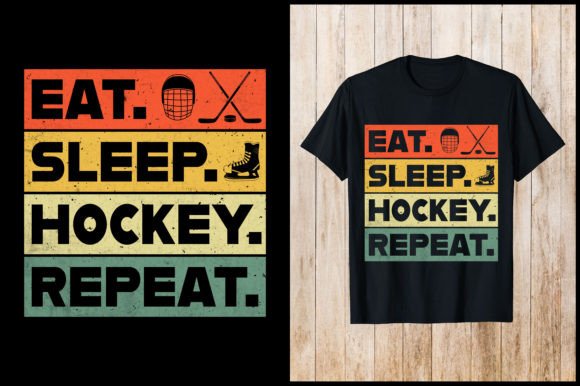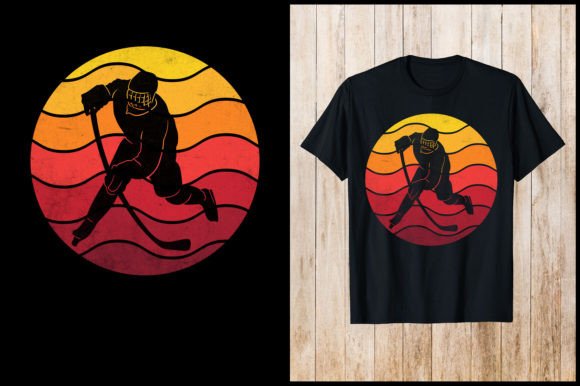
Retro Hockey T-Shirt Design Review
As a designer who spends more time judging stitch density than I do drinking coffee, I approach every new graphic asset with a healthy dose of skepticism. We have all been there: you find a "perfect" retro design online, buy the file, and then realize halfway through the digitizing or printing process that it simply will not translate well to fabric. It looks great on a screen, but on a chest? Not so much.
This is why I am taking a close look at the Retro with Hockey T-shirt Design. My goal here is not just to tell you what it looks like, but to evaluate its viability for real-world embroidery projects, small business merchandise, and custom gifts. Whether you are an Etsy seller looking for your next best-seller or a hobbyist making a personalized gift for a hockey fan, this review breaks down the practical implications of using this specific graphic asset.
First Impressions and Visual Personality
The moment you load the Retro with Hockey T-shirt Design, the mood is established immediately. It leans heavily into nostalgia, likely utilizing bold lines, vintage color palettes, and a layout that feels familiar yet distinct. For embroidery designers, the initial visual appeal is only half the battle; the other half is structural integrity.
From a design perspective, this asset falls squarely into the category of T-Shirt Designs within the broader Graphics niche. The aesthetic suggests a casual, spirited vibe. It feels like something that belongs on a weekend sweatshirt, a dad hat, or a commemorative item for a local league. The "retro" aspect implies a certain looseness in the style, which can be forgiving for stitching, provided the core elements remain clear.
What stands out is the balance between detail and simplicity. A common pitfall in sports-themed designs is overcrowding. If the design tries to include too many intricate background elements, it risks becoming a muddy mess when stitched. However, this particular design seems to prioritize strong silhouettes over fine minutiae, which is a green flag for both machine embroidery and direct-to-garment printing.
Real-World Application: Where Does This Fit?
Let’s move beyond the screen and imagine this design in a production environment. I recently had a client request a batch of custom embroidered patches for a youth hockey team’s end-of-season party. They wanted something that felt classic but not overly formal. The Retro with Hockey T-shirt Design would have been an excellent candidate for this scenario.
Here is how this design translates across various product categories:
- Custom Apparel and Sweatshirts: This is the most obvious application. The design’s proportions likely work well centered on the chest or placed as a larger graphic on the back. For sweatshirt embroidery, the retro theme pairs perfectly with heavy cotton blends, creating a cozy, authentic look.
- Caps and Hats: If the design has a compact footprint, it could easily be adapted for a front-panel cap placement. However, curved surfaces require careful tension management. A busy retro design might distort if the hoop size is too small or the stabilizer is insufficient.
- Personalized Gifts and Baby Items: There is a growing market for baby embroidery featuring sports themes. Parents love subtle nods to their hobbies. If the design can be scaled down without losing legibility, it would make for a charming onesie or bib. The key here is ensuring the thread colors are soft enough for infant wear while still maintaining the retro contrast.
- Home Decor and Accessories: Do not overlook non-apparel items. A tote bag design featuring this graphic could be a hit at craft fairs. Similarly, applying it to kitchen towels or pillow covers adds a playful touch to home decor. The versatility of the source files (AI, EPS, PNG) allows for easy resizing for these smaller formats.
Technical Considerations for Embroidery
While the graphic is ready for print, converting it to an embroidery file requires technical judgment. Even if you are using a pre-digitized version, understanding the underlying structure is crucial for quality control.
Stitch Density and Clarity: Retro designs often rely on solid blocks of color. In embroidery, these are typically achieved using fill stitch. You need to ensure that the fill density is appropriate for the fabric. Too dense, and the fabric will pucker; too sparse, and the base material will show through. Conversely, outlines usually use satin stitch. Check that the satin columns are wide enough to cover the underlay but not so wide that they lose definition.
Fabric Compatibility: The performance of this design varies significantly by substrate. On stable woven fabrics like cotton twill or denim, the design should hold its shape beautifully. However, caution is advised when working with stretchy knits or thin synthetic blends. Without proper stabilizer support—such as cut-away stabilizer for knits—the tension may cause the design to shift or warp during washing.
Thread Color Contrast: One of the biggest challenges in machine embroidery design is color theory. A retro palette might feature muted tones that clash against dark fabrics. Before committing to a full run, test the design on black and white mockups. Ensure that the thread colors provide enough contrast against the garment. If the design includes fine details, consider simplifying them or increasing the spacing between elements to prevent them from merging together.
Where to Use Caution
Not every surface is suitable for this level of detail. Be wary of placing this design on highly textured fabrics, such as terry cloth or boucle, where the needle penetration can be inconsistent. Additionally, avoid using it for very small applications, such as embroidered patches smaller than 2 inches, unless the design has been specifically simplified. Tiny lettering or intricate corners often get lost in the stitching process, resulting in a blurry final product that damages brand credibility.
Business Value and Customer Appeal
For Etsy sellers and small shop owners, the visual impact of a design directly influences conversion rates. The Retro with Hockey T-shirt Design taps into a passionate community. Hockey fans are loyal and often seek out merchandise that reflects their identity. By offering a high-quality, aesthetically pleasing design, you build trust and encourage repeat purchases.
Furthermore, the availability of multiple file formats (AI, EPS, PNG) makes this a versatile asset for digital product sellers. You can offer it as a printable mockup for customers who want to visualize the design before purchase, or sell the vector files themselves to other creators. This dual-use potential increases the value proposition of the asset.
When marketing your handmade products, emphasize the craftsmanship. Show close-up shots of the stitch work. Highlight how the retro theme complements the texture of the fabric. This storytelling enhances the perceived value of your finished product and justifies premium pricing.
Final Verdict and Best Practices
The Retro with Hockey T-shirt Design is a strong contender for anyone looking to add sports-themed flair to their collection. Its nostalgic charm and adaptable layout make it suitable for a wide range of applications, from commercial embroidery projects to personal gifts.
To ensure success, follow these practical steps:
- Test on Scrap Fabric: Always run a test stitch-out on the actual fabric you plan to use. This reveals issues with tension, puckering, or color blending that cannot be seen on a screen.
- Check Licensing: Confirm whether the design allows for commercial use. If you plan to sell finished items, ensure you have the right permissions to avoid legal complications.
- Optimize for Hoop Size: Verify that the design fits comfortably within your standard hoop sizes. If the design is large, consider breaking it into sections or using a multi-hooping technique.
- Inspect Details: Zoom in on the digital file. Are there any overlapping elements that might cause stitching errors? Simplify if necessary.
In conclusion, this design offers a compelling blend of style and functionality. With careful execution and attention to technical details, it can serve as a cornerstone for a successful line of craft business items. It is not just a graphic; it is a tool for creating meaningful connections with customers who share a love for the game.